€38,99
VISA, APPLEPAY, GPAY
Hassle-free returns within 30 days
Guaranteed quality
We’re here anytime
From €130
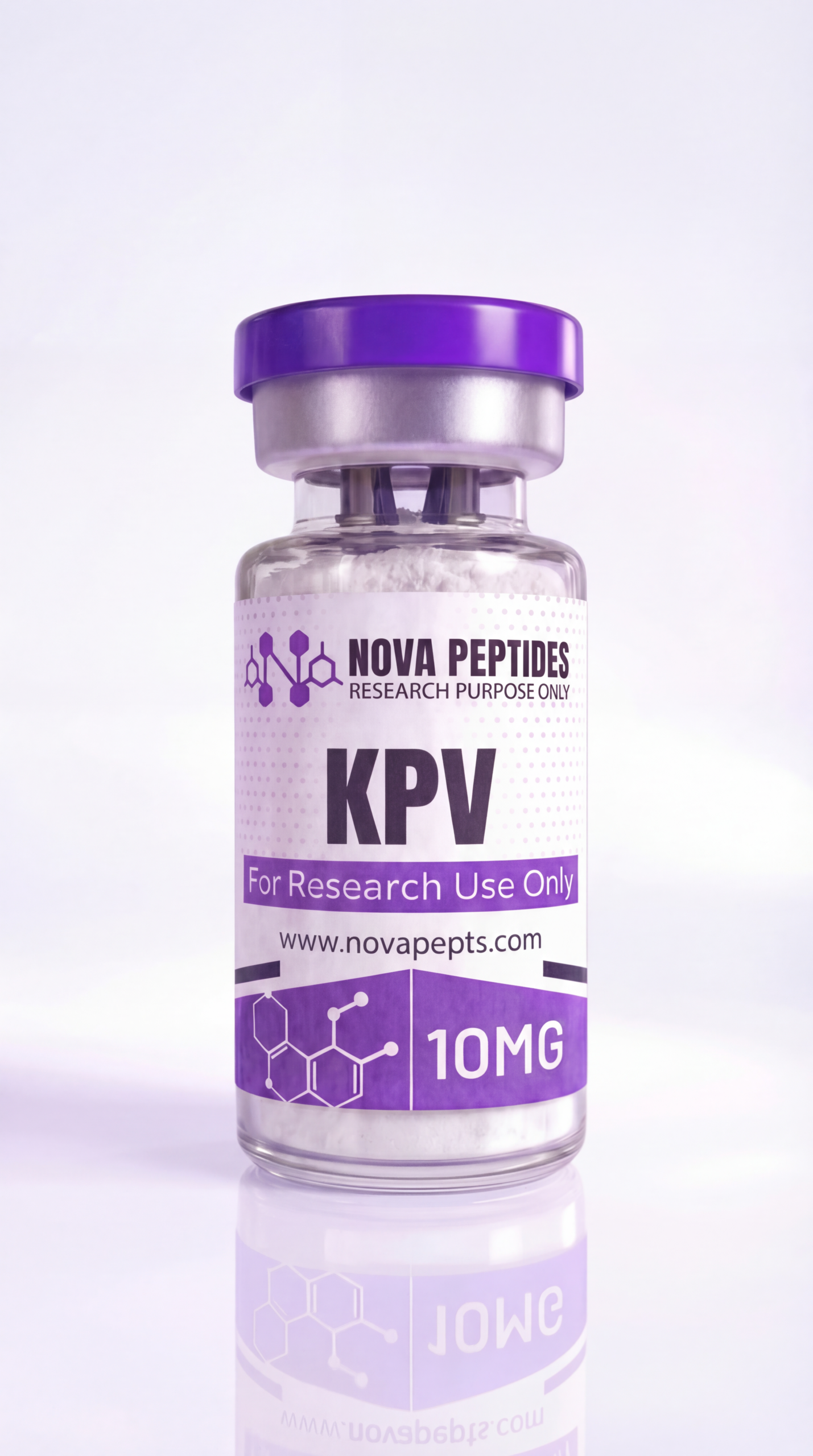
KPV is a short peptide made up of just three amino acids, Lysine, Proline, and Valine. It is derived from a larger compound and represents the specific segment associated with targeted inflammatory response support.
Despite its small structure, KPV has gained significant attention in research focused on inflammation and tissue repair. It is commonly studied for its potential role in supporting skin health and gut-related conditions.
KPV is associated with pathways involved in regulating inflammatory signals within the body, helping to support a more balanced immune response without broader systemic effects.
Its targeted nature has made it a promising area of interest in studies related to skin conditions, digestive health, and recovery from tissue stress.
Small in size, but highly focused. A peptide studied for its precision in supporting inflammation balance and overall system regulation.
KPV is small, elegant, and precise, and your research deserves a supplier that is just as reliable. CellPeptides is a European-based scientific and research company providing pure, high-quality peptides for labs worldwide.
When you order KPV from CellPeptides, you get:
KPV is a tripeptide composed of Lysine, Proline, and Valine. It is the active fragment of α-MSH responsible for the hormone’s anti-inflammatory and wound-healing properties. By isolating this tiny sequence, researchers can study the benefits of α-MSH without its broader systemic effects.
KPV works by entering cells and targeting the NF-κB pathway, which is a central regulator of inflammation. It signals inflammatory cytokines such as TNF-α, IL-6, and IL-1β to reduce their activity, making it a highly focused and promising candidate for managing inflammation in the skin, gut, and other tissues.
Conditions like psoriasis, atopic eczema, and contact dermatitis are driven by hyperactive local immune responses. KPV has been shown in studies to reduce inflammation at the source, not just mask symptoms. This offers a potential alternative to corticosteroids without systemic side effects.
KPV is also of interest in gut health research. Animal studies suggest it can survive the gastrointestinal tract and directly reduce inflammation in the intestinal mucosa. By targeting the NF-κB pathway, KPV limits tissue damage and promotes healing. This makes it a promising option for Crohn’s disease and ulcerative colitis.
Inflammation is important in early wound healing, but too much can slow recovery. KPV helps optimize the process, allowing wounds to progress through proliferation and remodeling stages more efficiently. Research has shown potential benefits for skin wounds, burns, and ulcers because of the melanocortin receptors it activates in skin tissue.
KPV enters the nucleus and regulates cytokine activity, reducing overactive immune responses. Early studies suggest potential applications in eye inflammation, arthritis, and brain inflammation, highlighting its versatility.
KPV is valuable to researchers investigating:
This tripeptide is small but potent, providing a targeted inflammation-fighting tool with promising applications across multiple tissues.
KPV is supplied as lyophilized powder and must be reconstituted with bacteriostatic water, for example 2 mL for a 10 mg vial. Inject slowly along the vial wall and swirl gently. Reconstituted KPV is stable in the fridge for 30 to 60 days for multi-dose studies.