€68,49
VISA, APPLEPAY, GPAY
Hassle-free returns within 30 days
Guaranteed quality
We’re here anytime
From €130
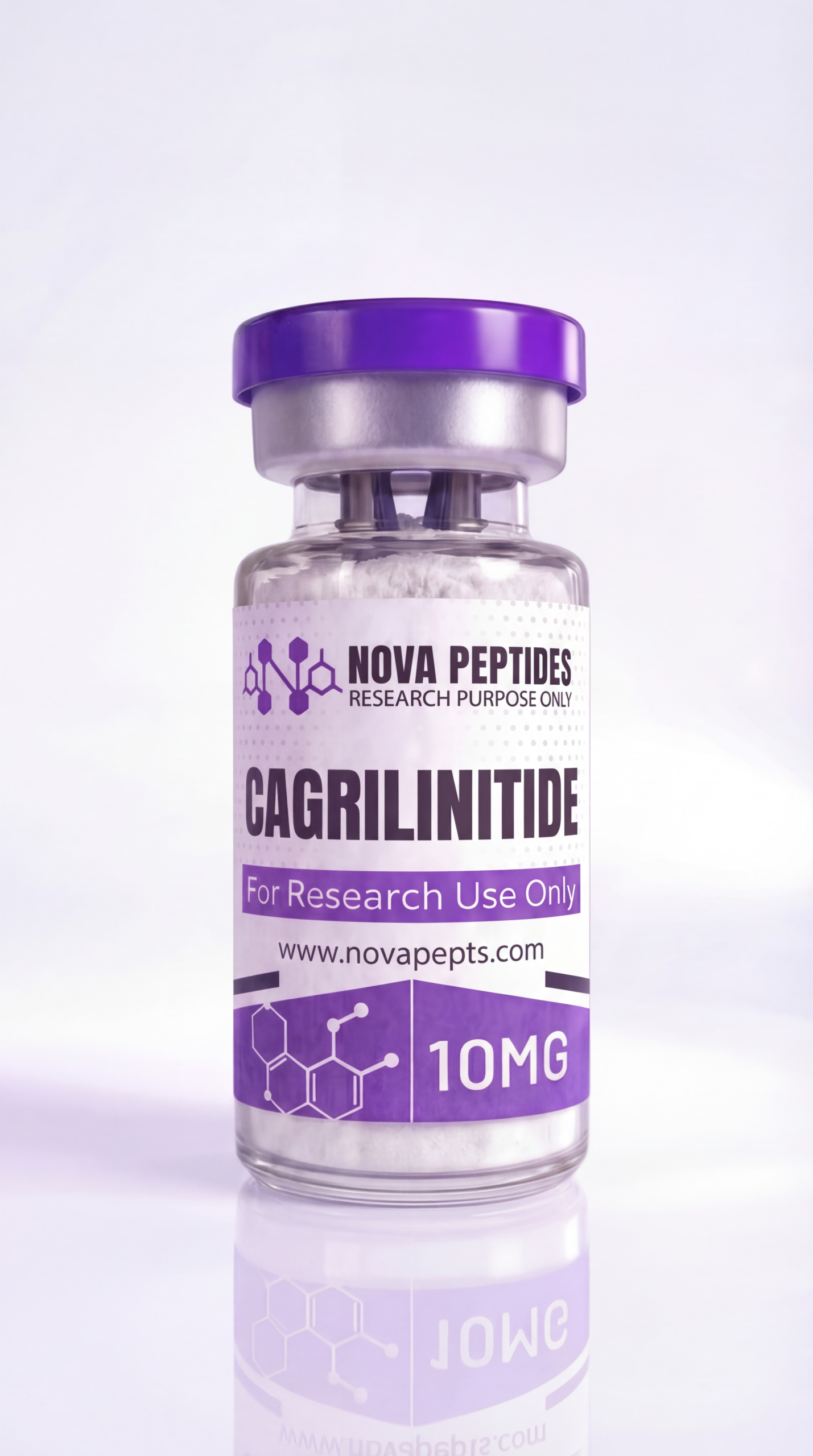
Cagrilintide is a synthetic amylin analogue designed to support appetite regulation and metabolic balance. It works by promoting a feeling of fullness, slowing gastric emptying, and helping regulate key metabolic signals.
While much of the attention in weight management research has focused on GLP-1 pathways, Cagrilintide operates through a different mechanism, offering an alternative approach to supporting satiety and energy control.
It has gained increasing interest in research settings, particularly in cases where other pathways may not deliver the desired response. Studies have shown promising outcomes, including notable reductions in body weight under controlled conditions.
Rather than being viewed as a replacement, Cagrilintide is often explored as part of a broader strategy. Research continues to investigate its potential when combined with other compounds, targeting multiple pathways involved in appetite and metabolism.
Not a shortcut, but a targeted approach to supporting how the body naturally regulates hunger, energy balance, and weight.
At Nova Peptides, we understand that advanced metabolic research requires more than just a single compound. Consistency, purity, and reliability are essential when exploring complex pathways or combination-based studies.
We provide high-quality peptides that are suitable for both individual and combination research, ensuring dependable results across every stage of your work.
With Nova Peptides, you get:
• High-purity peptide synthesis under strict quality standards
• Third-party tested batches with verified consistency
• Secure packaging to maintain product stability
• Fast and reliable global delivery
• Dedicated support to assist with product-related enquiries
Cagrilintide is a synthetic analogue of amylin, a hormone naturally released alongside insulin. It plays a role in appetite regulation, gastric emptying, and metabolic balance.
Unlike naturally occurring amylin, which has a short lifespan in the body, Cagrilintide is designed for extended stability, making it more suitable for ongoing research applications.
Cagrilintide works by influencing satiety signals and metabolic processes. It is commonly studied for its ability to:
• Promote a feeling of fullness
• Slow gastric emptying
• Support balanced glucagon activity
While these effects may sound similar to GLP-1 pathways, Cagrilintide operates through a different biological mechanism, making it a valuable area of study.
Cagrilintide has gained attention in research focused on:
• Weight management and metabolic balance
• Appetite regulation and satiety control
• Blood glucose and metabolic function
• Combination peptide strategies
Studies have shown promising outcomes, including notable reductions in body weight under controlled conditions. Research continues to explore its broader metabolic potential.
One of the most exciting areas of study involves combining Cagrilintide with other compounds.
Because it works through a different pathway, it is often explored alongside GLP-1 receptor agonists in multi-target approaches. This allows researchers to investigate how multiple mechanisms can work together to influence appetite and energy balance.
Long-term weight management often involves metabolic adaptation, where the body adjusts energy expenditure over time.
Emerging research is exploring how Cagrilintide may support sustained metabolic activity, making it a key area of interest for future studies focused on long-term outcomes.
Ongoing studies are also exploring potential roles in:
• Blood sugar regulation
• Insulin sensitivity
• Cardiovascular-related markers
These areas remain under active investigation as research continues to evolve.
Cagrilintide is commonly explored by researchers focused on:
• Obesity and weight-related studies
• Type 2 diabetes research
• Metabolic and hormonal pathways
• Combination peptide research
Cagrilintide is intended strictly for research purposes. Study designs may vary depending on the objective, including dosage, duration, and combination strategies.
Protocols often involve gradual adjustments to assess response within controlled environments.
Cagrilintide is typically supplied in lyophilised form.
For reconstitution, sterile solutions such as bacteriostatic water are commonly used. To maintain stability:
• Store in a cool, controlled environment
• Refrigerate after reconstitution
• Avoid shaking; gently mix to preserve integrity
This product is intended for research purposes only.
Not for human consumption.
Not for clinical or therapeutic use.