€33,99
VISA, APPLEPAY, GPAY
Hassle-free returns within 30 days
Guaranteed quality
We’re here anytime
From €130
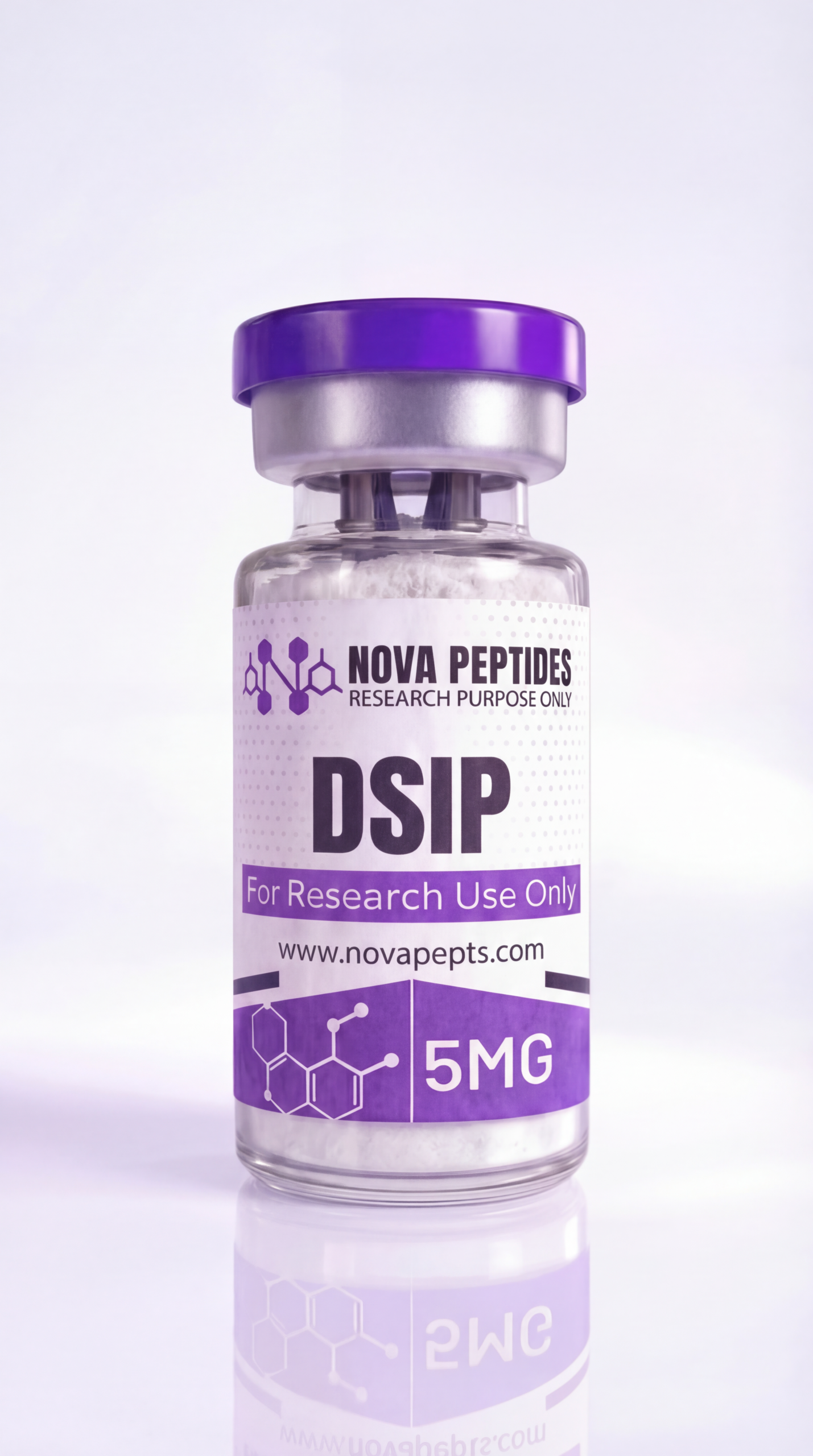
Delta Sleep-Inducing Peptide, commonly known as DSIP, was first identified through early research exploring sleep regulation. In initial studies, compounds linked to deep sleep were isolated, leading to the discovery of this peptide and its connection to natural sleep cycles.
DSIP is associated with supporting delta-wave sleep, the deepest and most restorative phase of rest, without the lingering effects often linked to sedative compounds. This has made it a key focus in research related to sleep quality and recovery.
Beyond sleep, DSIP is considered a multi-functional peptide with potential influence across several biological systems. Research has explored its role in stress response, neurological balance, and overall system regulation.
Its wide-ranging research potential has led to growing interest in areas such as recovery, cognitive function, and stress-related conditions.
Not just a sleep-focused peptide, but a compound studied for its broader role in supporting balance, recovery, and overall system function.
When researching peptides that replicate natural biological signals, precision and purity are essential. At Nova Peptides, we ensure every batch meets strict quality standards so your research starts with confidence.
With Nova Peptides, you get:
• High-purity peptide formulations
• Third-party tested for accuracy and consistency
• Secure packaging to maintain stability
• Fast and reliable global delivery
• Dedicated support for product-related enquiries
Delta Sleep-Inducing Peptide is structurally aligned with naturally occurring compounds found in the central nervous system.
It is commonly studied as a regulatory peptide, meaning it may help support balance across multiple systems rather than acting through a single pathway.
Research suggests DSIP may influence the body’s stress response system, particularly pathways related to hormonal balance and recovery cycles.
It is also associated with interactions involving neurotransmitters linked to relaxation, mood, and overall neurological function.
DSIP is widely studied for its role in supporting natural balance across several biological systems.
Key research areas include:
• Sleep regulation and recovery cycles
• Stress response and hormonal balance
• Neurological function and cognitive support
• Pain perception and recovery processes
Its multi-functional nature makes it a unique focus in research exploring system-wide regulation.
DSIP is most commonly associated with deep sleep cycles, particularly slow-wave sleep.
Research continues to explore how supporting these natural sleep phases may influence recovery, memory processing, and overall well-being.
Emerging studies suggest DSIP may play a role in supporting neuronal stability and protecting against stress-related cellular impact.
This has led to growing interest in research focused on long-term brain health and system resilience.
DSIP has been studied for its potential influence on stress-related pathways, including those linked to hormonal regulation.
Research continues to explore how it may support balanced stress responses and overall system stability.
Some studies have explored DSIP in the context of pain perception and recovery.
Its interaction with neurological pathways has made it a point of interest in research focused on recovery support and system regulation.
DSIP is commonly explored in research focused on:
• Sleep and circadian rhythm studies
• Stress and hormonal balance
• Neurological function and protection
• Recovery and system regulation
This product is supplied in lyophilised form for stability.
For preparation:
• Reconstitute using bacteriostatic water
• Inject slowly along the vial wall
• Gently swirl to mix, do not shake
• Store refrigerated after reconstitution
Study protocols may vary depending on the research objective.
Approaches typically involve controlled conditions, with adjustments based on response and study design.
This product is intended for research purposes only.
Not for human consumption.
Not for clinical or therapeutic use.